Insect-plant-microbiome interactions

We study natural plant defense mechanisms against insects, how herbivorous insects manipulate their host, and how the microbiome affects this interplay.
“How do plants defend themselves? How do herbivorous insects manipulate these defenses? And what role does the microbiome play in insect-plant interactions?”
We work on several insects, with aphids (Aphididae) as our focal model. They have evolved needle-shaped mouthparts (stylets) to feed on the sugar-rich phloem sap of their host. Without harming cell integrity, aphids navigate their stylets through the plant cell wall to reach a sieve tube. After salivation in the sieve tube, they can ingest phloem sap passively for hours or days. During most of the year, there are only asexual female aphids and thanks to their short life cycle and telescoping generations (an aphid adult already carries her granddaughters in the womb!), their populations can grow exponentially. Worldwide, aphids inflict significant yield reduction due to transmission of plant viruses, deprivation of photoassimilates, induction of costly immune responses, and mold growth on honeydew excretions. Caterpillars and rootflies also belong to the herbivores we study. We investigate their feeding behaviour, the damage they inflict in their host plant and their development from egg to adult.
Fortunately, plants are not helpless victims. Although sometimes crops seem to be quite susceptible, wild relatives have a vast diversity of phytochemicals and defense proteins. Plant defense mechanisms can be constitutive or induced and can consist of e.g. phloem proteins that restrict phloem sap ingestion, or for example, toxic metabolites that impair insect fitness. Our studies also show that microbes (e.g. bacteria, fungi, yeasts) in and around leaves and roots, can strengthen natural plant defense responses. We extend these insights to the flower, to study how microbes change the chemical landscape of nectar and change the interaction with pollinators. And we explore how the insect microbiome may change insect-plant relations.
Techniques that we often use in our experiments involve Electrical Penetration Graph recording and video tracking to study insect behavior. To unravel physiological interactions between insects, plants, and their microbiome, we adopt molecular techniques, such as single cell sequencing, spatial transcriptomics, microscopy, genome editing, and (meta) transcriptomics.
Our research aims to obtain more insights in how herbivorous insects manipulate their host, how host plants successfully defend themselves, and how the microbiome can support natural plant defenses. Together with our partners in the plant breeding and biocontrol industry, we contribute to the development of integrated pest management strategies to reduce insecticide application.

The insect-plant-microbiome interactions research team
Topics
- Plant resistance to insects
- Host plant manipulation by insects
- The role of the microbiome in insect-plant interactions
If you are interested in our research, please check the list of projects below!
Beneficial microbes to mitigate drought stress and aphid herbivory in Brassica crops
Beneficial microbes to mitigate drought stress and aphid herbivory in Brassica crops

Beneficial microbes to mitigate drought stress and aphid herbivory in Brassica crops
Beneficial microbes to mitigate drought stress and aphid herbivory in Brassica crops

Microbiome-Assisted resistance against Delia radicum in Cabbage
Assembly of the Delia radicum-associated plant microbiome
Sweet or sour - how the nectar microbiome shapes the pollinator community in brassicaceous plants
Pollination by insects is rewarded with floral nectar. However, as a nutrient-rich and well-protected environment, flower nectar also supports a diverse community of beneficial, commensal, and antagonistic microbes. These microorganisms influence the interaction between the plant and its pollinators, but also with nectar robbers and flower-feeding herbivores by altering the nutritional value and the chemical composition of the nectar. Despite the importance of pollination for seed production of many brassicaceous crops, little is known on the role of the nectar microbiome for plant fitness and seed set in these plants. Besides plant fitness, nectar microbes also impact pollinator health and thereby strongly influence the pollinator community beyond individual plant-pollinator interactions. The central questions of this PhD project are (I) does the microbiome in the flower nectar influences plant-pollinator interactions and plant fitness? (II) can specific microbes be used to improve seed set in brassicaceous crops as well as pollinator health?
Microbe-induced resistance in Capsicum to the green peach aphid
Microbe-induced resistance in Capsicum to the green peach aphid
Microbiomics applied to plant-insect interactions
Microbiomics applied to plant-insect interactions
Versatile Aphids: the role of salivary components and the micriobiome on aphid-plant interactions
Versatile Aphids: the role of salivary components and the micriobiome on aphid-plant interactions
SignAphy – Spatio-temporal dynamics of rapid plant signals in response to aphids
SignAphy – Spatio-temporal dynamics of rapid plant signals in response to aphids
Plant resistance to aphids in wild peppers
Plant resistance to aphids in wild peppers
Evolution of growth-defence-reproduction tradeoffs to multi-herbivore attack in the Brassicaceae plant family
Evolution of growth-defence-reproduction tradeoffs to multi-herbivore attack in the Brassicaceae plant family
Discover the repertoire of plant defence plasticity to multi-herbivore attack and its phylogenetic relationship
Discover the repertoire of plant defence plasticity to multi-herbivore attack and its phylogenetic relationship
Phloem-based resistance to aphids and potyviruses
Phloem-based resistance to aphids and potyviruses
Genetic variation in recruitment of beneficial soil microorganisms to combat insect herbivory in cabbage
Recently, researchers hypothesised that, upon insect attack, plants can attract beneficial soil microorganisms to the rhizosphere which enhance plant defence against insects. Plant breeders are interested in these mechanisms to enhance them in crops like Brassica species (e.g., cauliflower or broccoli). However, little is known about the genetic variation in these plant traits, while such information is essential for plant breeders. Therefore, I will investigate in this research, whether Brassica oleracea varieties exhibit genetic variation in recruiting beneficial soil microorganisms upon herbivore attack, to facilitate selection for enhanced insect resistance in crops. The following steps will be made: first, I will select one accession out of multiple B. oleracea accessions that reduces insect performance most upon herbivore-induced changes in the microbiome. Second, I will investigate the change in microbiome composition in the selected B. oleracea accession after herbivory. Third, by RNA sequencing, I will identify cabbage genes that are involved in enhanced plant defence upon herbivore-induced change in the microbiome. Fourth, I will assess the effect of enhanced plant defence, and specific genes involved in this defence, on the performance of several herbivorous insects. Five major insect pests of Brassica will be included, from different feeding guilds, including aboveground and belowground species. In this research, I expect to find insect-resistance genes that play a role in enhancing plant defence upon insect-induced change in the rhizosphere’s microbiome. The knowledge generated will be valuable to improve breeding insect-resistant crops which can increase food production and make agriculture less dependent on synthetic insecticides.
Roots crying for help: microbiome recruitment of Brassicaceae in response to insect herbivory
Roots crying for help: microbiome recruitment of Brassicaceae in response to insect herbivory
Surviving in a stressful environment: plant mechanisms for soil microorganism recruitment under drought and herbivory stress
Surviving in a stressful environment: plant mechanisms for soil microorganism recruitment under drought and herbivory stress
Genetic architecture of Arabidopsis-stress interactions
Genetic architecture of Arabidopsis-stress interactions
A diverse team of researchers works on insect-plant-microbiome interactions.
Contact us
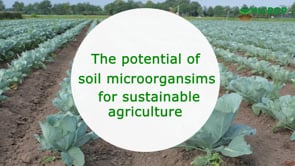
Video on the use of soil microorganisms for sustainable agriculture.
Insect species


Research themes

Entomology
Entomology, led by Bregje Wertheim, works on the physiology of insect-plant interactions and the ecology of parasite-host and predator-prey interactions.
Insect species
The cabbage aphid, Brevicoryne brassicae
This montage image shows how a cabbage aphid inserts her stylet into the phloem of a leaf. A microscope image of that stylet is seen in the magnifying glass.

The cabbage aphid, Brevicoryne brassicae
This montage image shows how a cabbage aphid inserts her stylet into the phloem of a leaf. A microscope image of that stylet is seen in the magnifying glass.

Cabbage aphids
This picture shows some cabbage aphids, Brevicoryne-brassicae on a cabbage leaf