Enabling informal economies

About this expertise
In short- Supporting actors in informal economies
- Mapping informal value chains
- Identifying incentives and power dynamics
- Developing strategies for systemic change
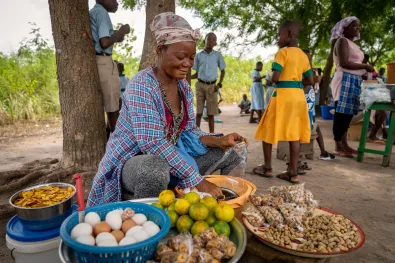
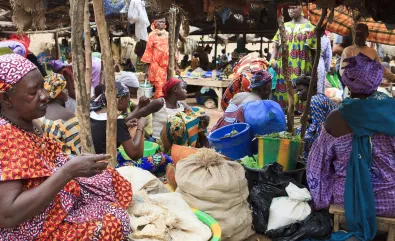
Wageningen University & Research investigates how informal food-economies, like small traders, street vendors, transporters, midstream actors, sustain food systems in the Global South. By mapping incentives, power relations, and barriers, WUR develops tools to integrate informal actors into food policy and strengthen inclusive, resilient systems.
Our approach begins with analysing how informal food systems function. We focus on specific value chains, mapping key actors, their relationships, motivations, and the incentives or barriers shaping their behaviour, including power dynamics and capacity for change.
By identifying leverage points, we uncover who can drive transformation and what triggers enable positive shifts. For example, when addressing food loss, we locate where waste occurs, which actors are involved, and how targeted actions can create broader improvements. These small, strategic interventions generate ripple effects across the entire chain.
We also examine through dialogue why informal sectors remain undervalued and how narratives portraying them as disorganised or unsafe reinforce marginalisation. Designed for replication, our diagnostics identify scalable interventions across regions and sectors. By placing informal entrepreneurs at the centre of investment and policy, we foster inclusive, sustainable, and resilient food system transformation.
Examples of our work
A group of alumni of WUR courses for mid-career professionals from Africa, Asia and Latin America joined an Informal Economy trajectory at WUR. This resulted in 20 case studies to inspire meaningful engagement with actors in the informal economy.
Case studies
- A Twin-Track Approach: Co-existence of informal and formal dairy value chains in Kenya
- Brokering from the farm to the shop, Improving connections between actors in Bhutan
- Enset: a ‘Wonder Plant’ or an additional burden for women?
- Fostering connections between formal and informal economies for women’s empowerment
- Informal actors in the Nigerian Food System
- Formalize or not? The case of the Water Users’ Association in Tanzania
- How informal self-employment and value addition can create a rich variety of food products
- Informal actors linking highland fruits and vegetables to lowland markets
- Clashes between formal and informal maize seed systems in Indonesia
- Mapping domestic grape value chains in Maharashtra, India
ㅤ
- Informal and formal actors can be further connected
- Moving animals and/ or moving grass. A clash of interests in drought-prone Somaliland
- Thriving amidst conflicts. Informal economy actors in times of conflict in Ethiopia
- Vegetables for the city. Survival market gardening in the Democratic Republic of Congo
- Supplying vegetables in the context of protracted crises and failing interventions in Congo
- Women claiming their space through formalisation in India
- Our national fruit can do better. Importance of informal actors in Bangladesh
- Navigating between feasts and fasting. Informal actors dealing with fluctuations in demand in Ethiopia
- How informal value chain actors nurture indigenous knowledge in Kenya
- Reintroducing and scaling sorghum in East Nusa, Indonesia
Get inspired

Get in touch with our expert
Do you have a question about enabling informal food economies or opportunities to work with us? Please get in touch.